The Existing BGV Process is Not Ideal for Enterprise-Grade Employers. Here’s Why.
Enterprise workflows depend on scalability and quick execution. However, in the case of background verification (BGV), the larger the scale, the slower the process becomes.
Why does this happen? On the surface, the BGV process may appear well-organized. But in reality, it is hindered by manual operations, constant follow-ups, miscommunication, and a strong resistance to adopting modern technology.
Let’s analyze the traditional BGV process, to understand why it is ill-equipped to handle the rising demands of enterprise-scale employers.
Manual Document Collection is Often a Nightmare for HR Teams
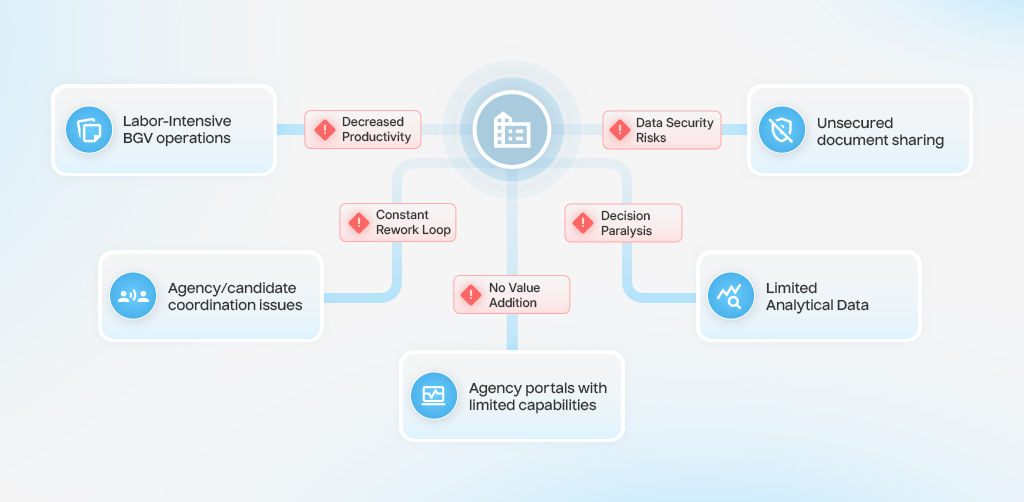
The HR team at an employing organization typically collects candidate documentation through unsecured channels like email, cloud drives, third-party forms, and WhatsApp.
Furthermore, candidates often delay their responses, requiring constant follow-ups. This results in talent acquisition and HR teams spending valuable time tracking down missing documents, correcting formats, and validating basic information.
Communication and Transparency Issue with External BGV Agency
Once the documents are compiled, they are sent to an external BGV agency for verification. For those unfamiliar with the process, this may appear to be the final step in HR’s role. However, the reality is far from that.
What follows is a continuous cycle of follow-ups, document resubmissions due to insufficiencies, and relentless chasing of both candidates and vendors for updates.
The challenges involved are rarely discussed at the top management level. All they are aware of is that the BGV reports take time to arrive - what happens in between is largely a mystery.
And why wouldn’t it be? Even HR personnel working directly with the BGV agency often do not have visibility into the process. There is no effective system in place - just a portal provided by the agency, which offers minimal support.
Agency Portals: Adding Complexity, Not Value to Employer’s Workflow
Large organizations often collaborate with multiple BGV agencies to streamline operations and reduce dependence on vendors. Each agency provides its own management portal for the employer to manage operations and communication.
However, these portals are primarily designed to share data between parties and often lack crucial features like tracking, billing, and other functionalities that would benefit the employer. Despite these limitations, employers have no choice but to onboard each agency’s portal as there’s no alternative.
With each new portal comes a learning curve, platform issues, and increased management overload.
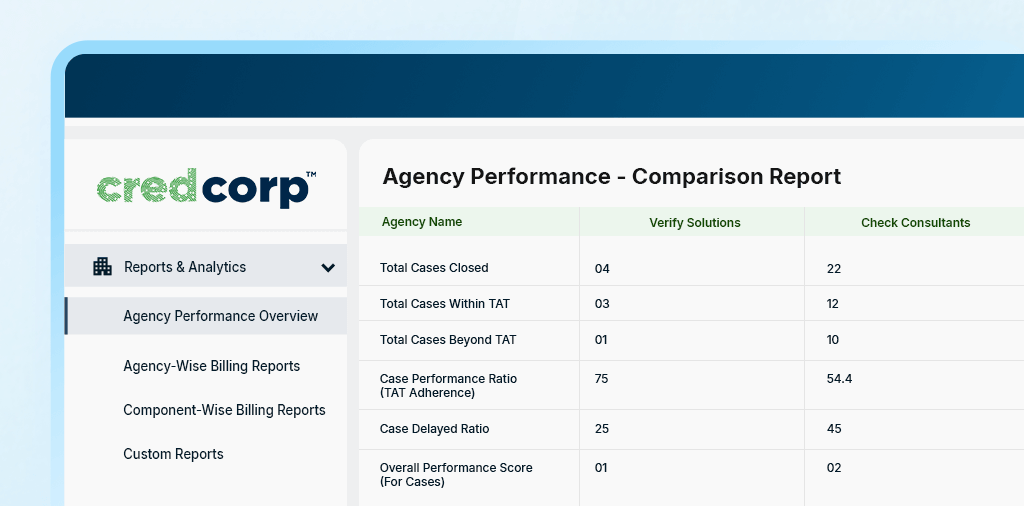
Decision Paralysis Due to Limited or Lack of Performance Data
Thomas H Davenport, a renowned American academic and author, once said, “Every company has big data in its future and every company will eventually be in the data business.”
However, with BGV, the lack of centralized data, standardized operations, or structured processes makes it nearly impossible to gather meaningful data for decision-making.
Missing Data Security, and Standardization
Candidates trust their employers with sensitive information, relying on their reputation. However, once this data is handed over to a background verification (BGV) agency, employers lose control over how it’s stored and used.
For global companies hiring talent worldwide, the challenge increases. Employers must stay updated on global compliance regulations, incorporate them into their processes, and adjust every time there’s a change.
Comparing Current BGV Process Against Desired Output
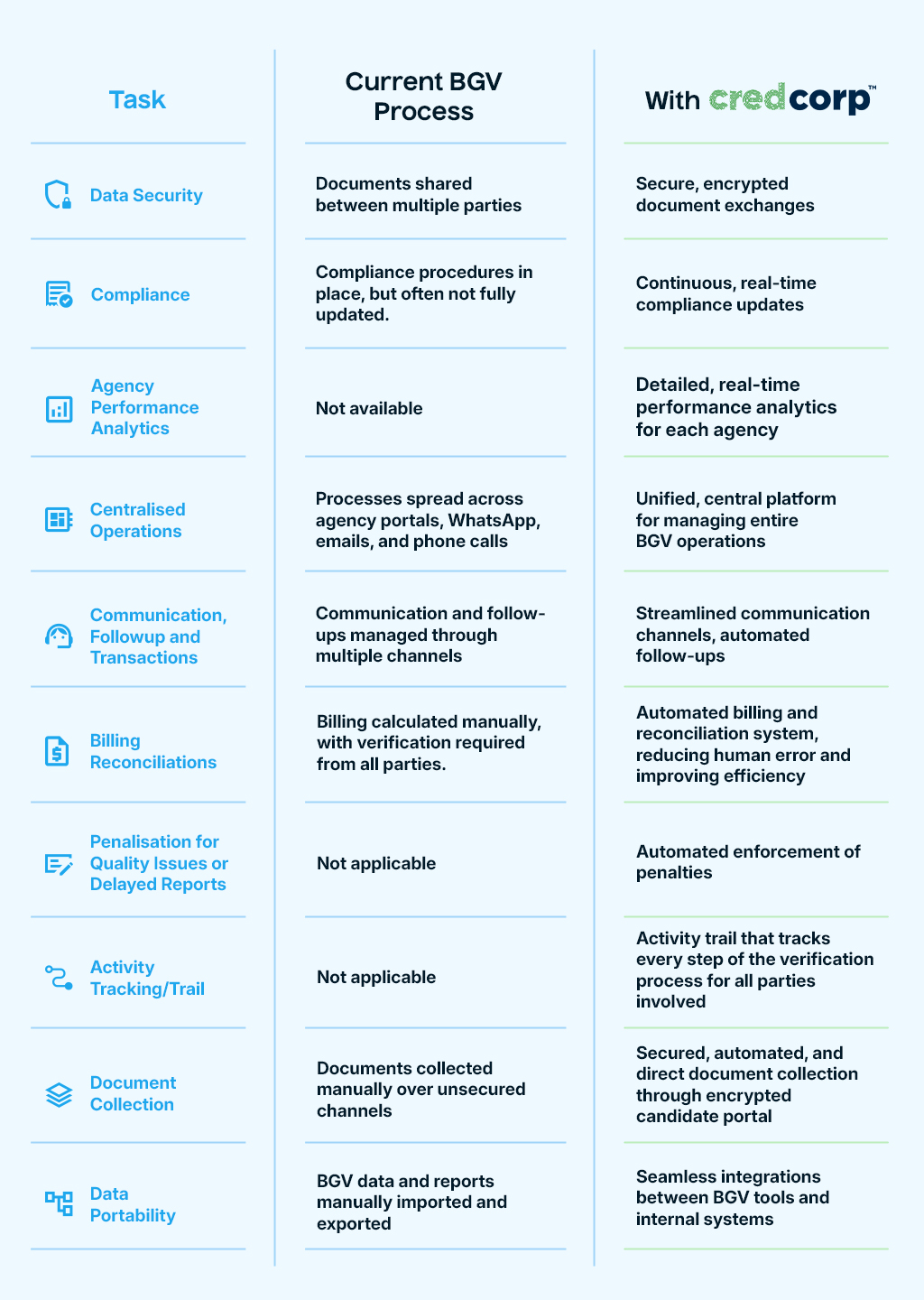
To better understand the differences between the current background verification (BGV) process and the desired improvements, we've created the following comparison table.
It highlights key areas where the current process falls short and outlines the improvements that one should expect or hope to achieve.
What Would Be The Most Ideal Solution?
In an ideal scenario, companies would develop their own internal systems to handle these activities. However, this approach often proves to be challenging.
For some, the investment of time and money is not practical, while for others, the problem might not even be on their radar. Even large enterprises, despite their significant resources, may spend years on research, reaching consensus, and navigating delays before they initiate development, as their pace tends to be slow. And even then, success isn’t guaranteed.
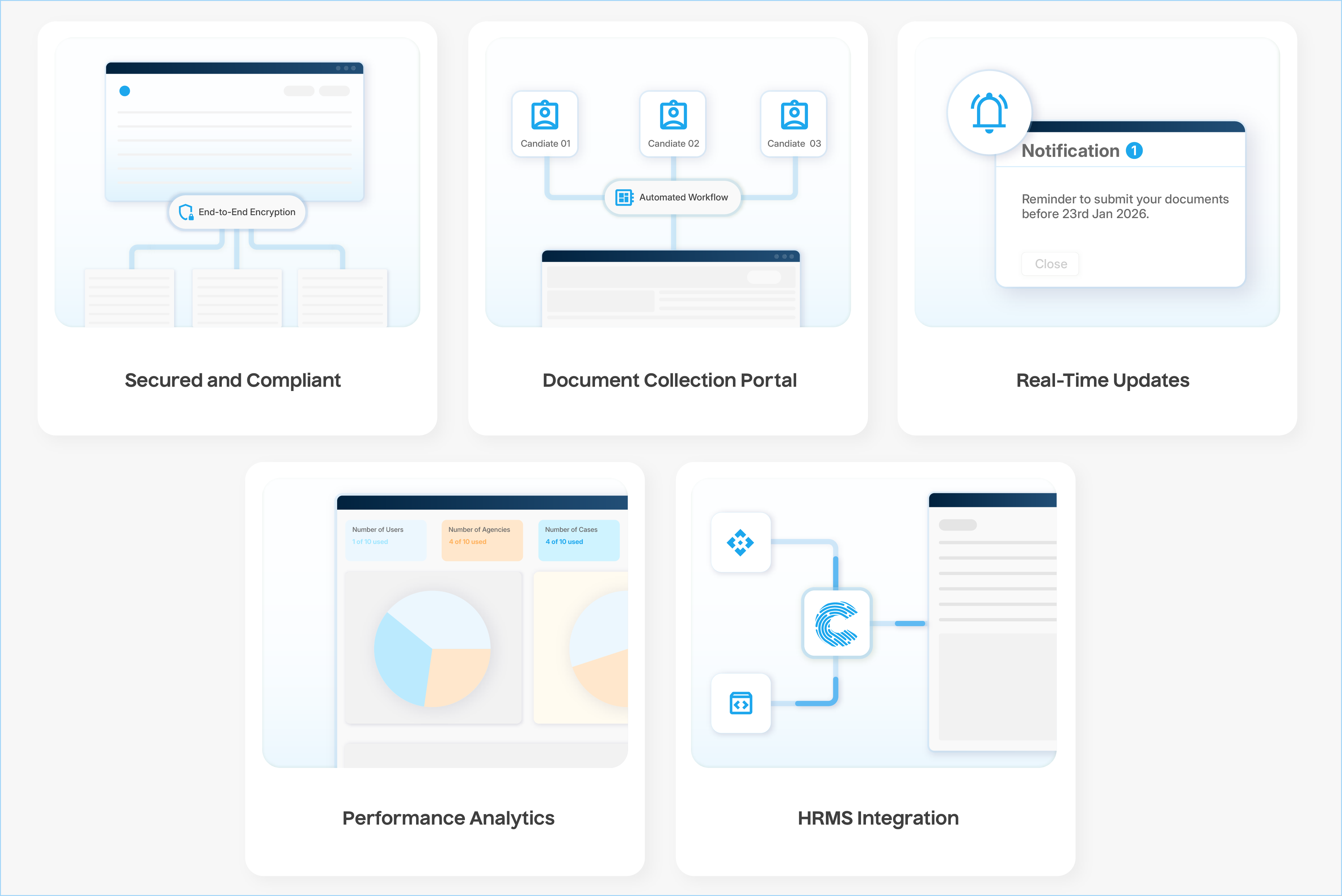
A more efficient solution is to switch to a platform that acts as a centralized hub for background verification (BGV) operations. This platform should offer features that automate processes, ensure transparency, and enable better control.
Previously, organizations had limited options, but with the introduction of CredCorp, that is no longer the case. With CredCorp, all the desired outcomes we’ve discussed above - and more - are now possible.
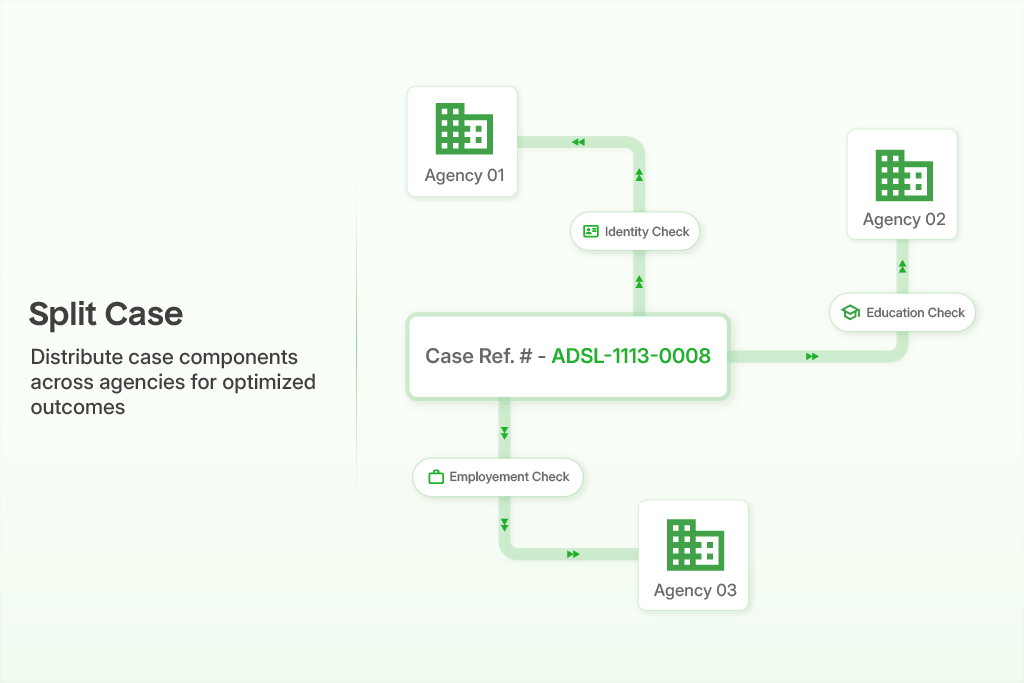
CredCorp offers the features HR professionals have long desired, including live activity tracking, the ability to split case components across multiple agencies, HRMS integration, and automated follow-ups. When it comes to streamlined BGV, CredCorp delivers.
Curious about its features, capabilities, and what you can expect?